
Kansas City Uber & Lyft Accident Attorney

Uber and Lyft carry $1 million in liability insurance per ride, but they will fight to avoid paying it. The driver says they were off the app. The company says the driver is an independent contractor. The insurance company says the other driver was at fault. Sorting out who pays requires a lawyer who understands the three-tier insurance system these companies use. Call 816-533-3969 for a free consultation.
Kansas City Uber and Lyft Accident Attorney — How Rideshare Insurance Actually Works
Uber and Lyft accidents are not like regular car accident cases. In a standard car wreck, you file a claim against the at-fault driver’s insurance. One driver, one policy, one adjuster. In a rideshare accident, there can be three or four insurance policies in play at the same time, and every insurer will point at someone else and say it is not their responsibility. The rideshare company’s insurer says the driver’s personal policy should pay. The driver’s personal insurer says the rideshare company’s policy applies. The at-fault third party’s insurer says the rideshare driver contributed to the crash. While they argue, your medical bills pile up and nobody pays.
We have handled rideshare accident cases in the Kansas City metro for years, and the insurance structure is the same fight every time. Uber and Lyft designed their insurance systems to create confusion about who pays. Understanding how the three tiers work is the single most important factor in getting your claim paid. Here is how it actually works.
The Three-Tier Rideshare Insurance System
Both Uber and Lyft use a tiered insurance model that changes based on what the driver was doing at the exact moment of the crash. The tier determines which insurance policy covers your injuries and how much coverage is available.
Tier 1 — App Off: The driver’s personal auto insurance is the only coverage available. Uber and Lyft provide nothing. Most personal auto policies exclude commercial rideshare activity, which means there may be a gap in coverage. If the driver did not purchase a rideshare endorsement on their personal policy, you may have a claim against an uninsured driver. Your own uninsured motorist coverage may be your best option.
Tier 2 — App On, No Passenger Match: The driver has the app open and is waiting for a ride request, but has not been matched with a passenger yet. Uber and Lyft provide contingent liability coverage during this period. The coverage limits are lower than Tier 3, typically $50,000 per person, $100,000 per accident for bodily injury, and $25,000 for property damage. This coverage only kicks in after the driver’s personal policy denies the claim or is exhausted.
Tier 3 — En Route to Pickup or Carrying a Passenger: This is when the full $1 million liability policy applies. From the moment the driver accepts a ride request until the passenger exits the vehicle, Uber and Lyft carry $1 million in third-party liability coverage and $1 million in uninsured/underinsured motorist coverage. If you were the passenger, this is the policy that covers your injuries regardless of who caused the crash.
The practical problem is proving what tier the driver was in at the time of the accident. Uber and Lyft have GPS and app data that shows exactly when the driver was on the app, when they accepted a ride, and when the ride ended. This data is on their servers, and they will not give it to you voluntarily. We subpoena it.
Who Can File a Rideshare Accident Claim?
Passengers: If you were riding in an Uber or Lyft when the crash happened, you have the strongest claim. The $1 million Tier 3 coverage applies regardless of fault. You can file against the rideshare company’s policy, the at-fault third-party driver’s policy, or both. As a passenger, you are almost never at fault for the accident.
Other drivers: If an Uber or Lyft driver caused the accident that injured you while you were driving your own car, the rideshare company’s insurance covers your injuries at whatever tier the driver was in. If they had a passenger (Tier 3), you have access to the $1 million policy. If they were waiting for a match (Tier 2), coverage drops to $50,000/$100,000.
Pedestrians and cyclists: If an Uber or Lyft driver hit you while you were walking or riding a bicycle, the same tier analysis applies. Pedestrian and cyclist injuries from rideshare vehicles tend to be severe because there is no protection between you and the vehicle.
Rideshare drivers: If you are an Uber or Lyft driver who was injured in a crash caused by another driver, you can file against that driver’s insurance. You may also have a claim under Uber or Lyft’s uninsured/underinsured motorist coverage if the at-fault driver’s policy is insufficient. You cannot file a workers’ compensation claim because Uber and Lyft classify drivers as independent contractors, not employees.
Missouri vs. Kansas: Rideshare Accident Laws
Missouri is an at-fault state with pure comparative fault and a 5-year statute of limitations. If the rideshare accident happened in Missouri, you can recover damages even if you were partially at fault. Your recovery is reduced by your percentage of fault, but it is never eliminated.
Kansas is a no-fault state for auto insurance. After a rideshare accident in Kansas, your own PIP (Personal Injury Protection) insurance pays the first $4,500 in medical expenses and up to $900/month in lost wages, regardless of fault. You can step outside the no-fault system and sue the at-fault driver when your injuries meet the serious injury threshold: medical expenses exceeding $2,000, a fracture, permanent disfigurement, or permanent impairment. Most rideshare accident injuries exceed this threshold easily.
Kansas uses modified comparative fault with a 50% bar. If you are assigned 50% or more fault in Kansas, your claim is barred entirely. The 2-year statute of limitations is also significantly shorter than Missouri’s 5-year window.
Both Missouri and Kansas have adopted the Transportation Network Company (TNC) insurance framework that establishes the three-tier system described above. The minimum coverage requirements are codified in state law, so the rideshare companies cannot reduce their coverage below the statutory minimums.
Common Causes of Rideshare Accidents
Rideshare drivers face pressure that regular commuters do not. The app rewards drivers who accept rides quickly, complete rides fast, and maintain high ratings. This creates incentives to check the phone while driving, rush through yellow lights, make sudden lane changes to reach a pickup spot, and double-park in traffic lanes to pick up or drop off passengers. The most common rideshare accident scenarios we see are distracted driving (checking the app), sudden stops in traffic lanes for pickups and dropoffs, illegal U-turns to reach a destination, running red lights or stop signs while rushing between rides, and fatigued driving from working 10-14 hour shifts.
Compensation in Rideshare Accident Cases
Rideshare accident claims can include all the same damages as any other personal injury case: medical expenses, lost wages, pain and suffering, and property damage. The difference is the available insurance coverage. With up to $1 million in Tier 3 coverage, rideshare accident claims often have more insurance available than a typical car accident case where the at-fault driver carries Missouri’s minimum $25,000 policy or Kansas’s minimum $25,000 policy.
Severe injuries — traumatic brain injuries, spinal cord damage, multiple fractures, catastrophic injuries requiring long-term care — can approach or exceed the $1 million policy limit. When they do, we stack additional coverage from your own uninsured/underinsured motorist policy, the at-fault driver’s personal policy, and any other available source.
Frequently Asked Questions
What insurance covers me if I was a passenger in an Uber that crashed?
Uber’s $1 million Tier 3 liability policy covers you from the moment the driver accepts your ride until you exit the vehicle. This applies regardless of who caused the crash. If another driver caused the accident, you can also file against that driver’s insurance.
The Uber driver says they were off the app. How do I prove otherwise?
We subpoena Uber’s trip data, which includes GPS tracking, app status logs, and ride acceptance timestamps. This data is stored on Uber’s servers and shows exactly whether the driver was on the app, waiting for a ride, or carrying a passenger at the time of the crash.
Can I sue Uber or Lyft directly?
Uber and Lyft classify their drivers as independent contractors, which limits direct liability claims against the company. Your claim is typically filed against the insurance policy the company provides. In some cases involving negligent hiring, retention, or supervision of a dangerous driver, a direct claim against the company is possible.
What if the rideshare driver had no insurance?
If the driver’s personal insurance lapsed or was canceled, Uber and Lyft’s Tier 2 or Tier 3 coverage still applies based on the driver’s app status. The rideshare company’s policy is separate from the driver’s personal policy.
How much does a rideshare accident lawyer cost?
Nothing up front. We work on contingency. If we do not win, you owe us nothing.
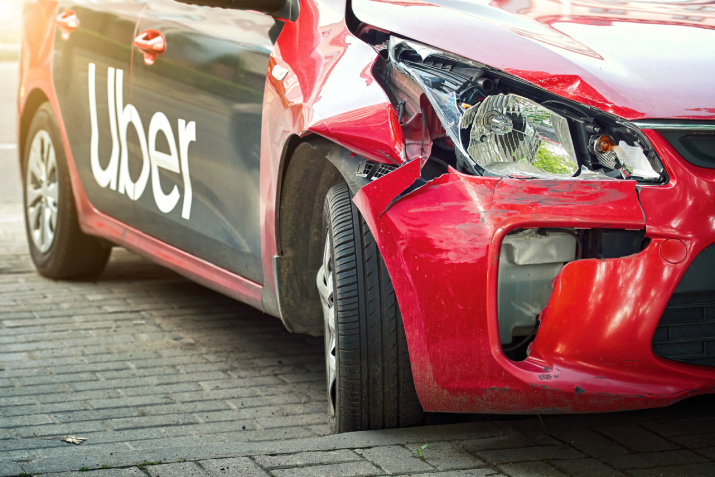
Uber and Lyft have $1 million in coverage for a reason. The injuries from these accidents are real, the medical bills are real, and the insurance is there to pay for them. The rideshare company will not hand that money over without a fight. We have been through that fight before.
Call 816-533-3969 for a free consultation. You pay nothing unless we win.
Frequently Asked Questions
Based on many factors like types of cases, lawyer experience, and fee structure influence the cost of hiring a lawyer in Kansas City. You generally pay GroverLawKC Injury & Accident Lawyers $0 upfront legal fees. Fees are only collected if compensation has been recovered.
Yes, If you were partially at fault for an accident, even so, you can often recover compensation, but in Laws like “comparative negligence” rules, based on your percentage of fault, you receive your compensation. The top personal injury lawyer at GroverLawKC Injury & Accident Lawyers can help in your case and fight for the compensation you deserve.
GroverLawKC Injury & Accident Lawyers and our personal injury lawyers can file a lawsuit to recover losses for damages resulting from the accident. The process for filing a claim includes seeking medical treatment, filing an accident report, gathering evidence, and filing a claim with the insurance company as well as in court.


